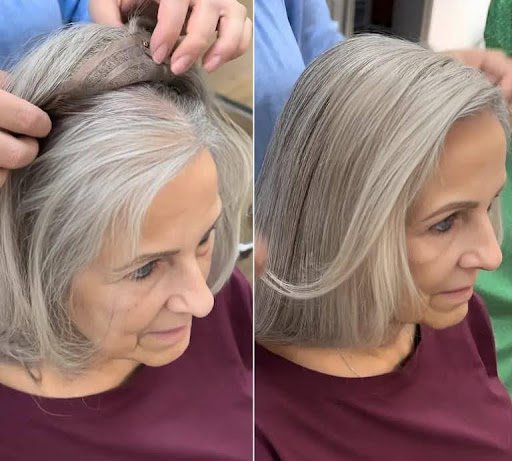
Not every woman facing hair thinning feels ready for a wig. In the early stages, the change is often subtle. A wider parting. Slight scalp visibility at the crown. Less volume where there once was lift.
At this point, many women look for quiet support rather than a full transformation. This is where toppers can make sense.
They are designed for partial coverage, not complete hair loss. When chosen and fitted well, they blend into existing hair and restore confidence without drawing attention.
Why Women Often Delay Taking Action
Early crown thinning can be difficult to talk about. It does not always feel serious enough to justify intervention, yet it can affect how you feel each day.
Some women delay trying toppers because they worry it signals something permanent. Others fear it will look obvious or artificial. There is also confusion. Are hair fibres enough? Should you wait? Is it too soon?
The truth is that early action often leads to a more natural outcome. When there is still healthy hair around the thinning area, toppers can anchor securely and blend more easily.
Waiting until thinning becomes advanced can limit options. Addressing it early does not mean giving up on your own hair. It means supporting it.
How Modern Toppers Differ from Traditional Wigs
Many people picture heavy, uniform pieces when they hear the word topper. In reality, modern toppers are very different from traditional wigs.
A wig covers the entire scalp. It replaces all natural hair visually. Toppers, by contrast, sit only over the thinning section, usually at the crown or parting. Your natural hair remains visible around the sides and back.
This partial design allows for:
- A lighter feel
- Better airflow to the scalp
- More natural movement
- Easier daily wear
Because they rely on your own hair for blending, toppers are particularly suited to early-stage thinning rather than complete loss.
The goal is integration, not concealment.
Silk Base vs Lace: What Makes Them Undetectable
The base construction plays a key role in how natural toppers appear.
Two common base types are silk and lace.
A silk base has layers that hide the knots where hair strands are attached. This creates the appearance of hair growing directly from the scalp. It can be helpful for women who part their hair in the same place daily.
Lace bases are lighter and more breathable. They allow the scalp beneath to show through slightly, which can look very natural when colour matched carefully.
Neither is universally better. It depends on your scalp visibility and styling habits. Women with very visible parting lines may prefer silk. Those seeking a lighter feel may lean towards lace.
A proper consultation, either in person or virtual, can help determine which suits your pattern of thinning.
Styling Without Flattening Your Natural Hair
One common concern about toppers is whether they will press down the surrounding hair and make the overall style look flat.
This usually happens when the base is too large or the clips are placed incorrectly.
For early crown thinning, smaller toppers often work better. They cover only the affected area and sit close to the scalp. Proper clip placement matters as well. Clips should anchor into healthy hair without pulling.
Light teasing at the root before attaching can create gentle support. Once secured, brushing your natural hair over the join softens the transition.
Heat styling can be done with care, matching the texture of your own hair. The aim is cohesion. Straight with straight. Soft wave with soft wave.
When blended thoughtfully, toppers should move with your hair, not sit above it.
Emotional Impact and Quiet Confidence
Hair thinning at the crown often feels personal. It is not always visible to others, yet it can affect how you feel in social or professional settings.
Women who begin wearing toppers in the early stages often describe a sense of relief. They no longer worry about bright lighting or overhead photographs. They feel more at ease.
This emotional shift matters. It is not about vanity. It is about comfort in your own appearance.
Some British specialists, including Tatiana Karelina, focus on tailoring pieces to subtle thinning patterns, recognising that early intervention requires sensitivity rather than dramatic change.
Practical Considerations Before Choosing Toppers
If you are exploring toppers for early crown thinning, keep a few practical points in mind:
- Measure the thinning area carefully
- Match colour in natural light
- Consider density that mirrors your own hair
- Ask about base size and clip type
- Plan for light shaping after fitting
Maintenance is straightforward. Gentle washing, air drying where possible, and storing the piece properly will help preserve its condition.
Because toppers integrate with your own hair, they tend to feel more manageable than full wigs for women at this stage.
Final Thoughts
Early crown thinning does not always require a full wig. For many women, toppers provide discreet support while preserving the look and feel of their own hair.
Understanding base types, sizing, and placement makes a real difference. When chosen with care, toppers can blend seamlessly and restore volume without drama.
Taking action early is not a sign of defeat. It is a practical step towards feeling comfortable and confident again.