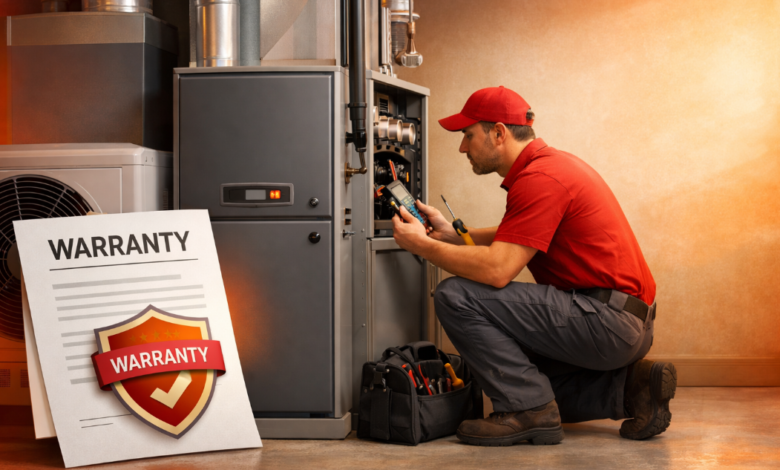
Congratulations. You just purchased a new furnace or heat pump. Now you’re sitting here staring at warranty documents, wondering what arcane language you just read.
Heating equipment warranties aren’t as complicated as they may seem. If you know what to look for, navigating the warranty process is fairly straightforward.
Below, we walk through the ins and outs of heating equipment warranties so you can file a claim with confidence should you ever need to.
Understanding Heating Equipment Warranties
A warranty is a manufacturer’s promise to repair or replace specified parts of your heating system if they fail within a specified time period. Essentially, a warranty ensures your new heating equipment functions properly.
There are always two types of warranties on a new piece of heating equipment: a parts warranty and a labor warranty. These two types of warranties cover different things, so we’ll explain each one separately.
Parts Warranties Explained
A parts warranty covers all the individual parts that make up your heating system. This includes heat exchangers, blower motors, circuit boards, etc. Simply put, a parts warranty means that if any part of your heating system breaks down during the warranty period, the manufacturer will provide you with a new replacement part at no cost to you.
Typically, parts warranties last anywhere from 5 years to 10 years. Some high-end brands even offer lifetime parts warranties on certain components. The longer the parts warranty, the more you can expect to pay up front. But it could save you thousands of dollars in the long run.
Keep in mind that most parts warranties only cover the cost of the part. You’ll be responsible for labor costs when it comes time to replace the failed component. So that free replacement compressor may cost you $200-$400 to install.
Labor warranties are just as they sound.
Having a labor warranty means that if your heating system requires repairs, you won’t be billed for labor. You won’t pay service call fees, you won’t pay hourly rates, and you won’t pay install or diagnostics costs.
Repair costs can often run into the thousands of dollars. So, labor warranties are worth every penny, in our opinion. That being said, many manufacturers only offer one year of labor coverage. What this means is that you only have one year to have anything repaired under the labor warranty. After that, you’re SOL.
For that reason, some homeowners opt to purchase extended labor warranties from their HVAC company. Extended warranties typically cost $100-$300 a year.
Register Your Heating Equipment
If you want your warranty to be worth the paper it’s printed on, be sure to register your heating equipment as soon as it’s installed. Seriously, don’t skip this part.
Manufacturers typically allow 60-90 days from installation date for you to register online. So, open your calendar app and put a reminder on there right now.
If you fail to register your heating equipment, some manufacturers will reduce your warranty from 10 years down to 5 years. Some won’t honor any warranty at all.
Submitting your registration gives you the full benefit of your warranty coverage. Take five and register online.
What Your Warranty Won’t Cover
Just as important as knowing what your warranty covers is knowing what isn’t covered.
Most manufacturer warranties won’t cover problems due to improper installation or maintenance. They also won’t cover issues caused by unforeseen circumstances like weather or animals. So, if you skip your annual maintenance appointments, your warranty could become void.
Normal wear and tear is another common exclusion. HVAC filters, belts, and fuses are all considered “consumable” parts that you’re expected to replace yourself.
If your furnace or heat pump is physically damaged, your warranty will be voided. Things like fallen tree branches, flooding, and animal damage are typically not covered by warranties (though homeowners insurance would kick in here.)
You Must Hire Professionals to Install Your Equipment
It should go without saying, but we’ll say it anyway…you must hire a professional HVAC technician to install your new furnace or heat pump. Do not try to save money by installing the equipment yourself. Your warranty is voided.
Your installer must install the equipment according to manufacturer specifications. This means proper sizing, proper ductwork, proper electrical connections, etc.
Hang onto your installation paperwork. You’ll need to prove how and when your equipment was installed should you ever need to file a claim.
Annual Maintenance is Required
Just like with installation, manufacturers require you to have annual maintenance performed by a licensed HVAC technician to keep your warranty valid. Plan on spending $80-$150 per year to keep your heating equipment running properly. Think of it as insurance.
Technicians perform preventative maintenance by cleaning system components, checking refrigerant levels, testing electrical connections, and identifying potential issues before they become bigger (and expensive!) problems.
Keep records of all of your maintenance visits. Save the invoices, service reports, and any other documentation the technician provides. These records prove you’ve been maintaining your heating equipment and can help diagnose future issues.
Do I Need an Extended Warranty?
Once your manufacturer warranty expires, you can purchase an “extended warranty” or “home warranty” that will cover repairs. These typically cost $300-$600 per year. Once your manufacturer coverage is gone, your “extended” warranty picks up where the manufacturer left off.
But be sure to read the fine print. Many extended warranties charge service call fees, have deductibles, and place lifetime caps on coverage. Some don’t cover pre-existing conditions or make you wait several months before your coverage starts. Do the math to see if it makes sense to pay several hundred dollars a year based on how often repairs are needed in your area.
Transfer Warranty to New Owners
Select heating equipment warranties are transferable to new homeowners if you sell your house. Transferable warranties can help you sell your home faster! To transfer your warranty, you’ll typically need to register the new homeowners and pay a small transfer fee. Make sure new buyers are aware of the warranty and guide them through the process of transferring it over to their name.
File a Warranty Claim
Once you know for certain the system is covered, call your installer—not the manufacturer. Your HVAC contractor will help you diagnose the problem and determine if warranty service is needed.
Have your model and serial number handy. You’ll also need to provide the date of installation and proof of purchase. Maintenance records are also recommended. Again, keep all these documents in a file for easy access.
Real‑world example of how HVAC warranties are important:
If you still aren’t convinced that HVAC warranties are worth your time and attention, consider this real‑world example from HVAC manufacturer resources explaining an actual warranty scenario:
“In North Carolina, one of our customers had a central air conditioner’s compressor die after seven years of faithful service. Well within the 10‑year parts warranty the manufacturer provided, the company replaced the compressor because the homeowner registered the equipment right away and kept meticulous maintenance records. Had he not had that warranty, he would have paid several hundred, if not thousands, of dollars for that single part. He still had to pay for labour, but at least having the pieces covered kept his bill much lower and allowed him to get many more years of life out of his air conditioning system.”
There are two big takeaways from this HVAC warranty example:
- Register your heating equipment and keep your service records because you’ll need them when something major breaks.
- Don’t discount the value of a “parts‑only” warranty. When a major and expensive piece of your equipment breaks down (think heat exchanger or compressor), those warranties can save you hundreds or even thousands of dollars.
👉 Read more about this HVAC warranty story here: https://www.accio.com/supplier/best-hvac-manufacturer-warranty
Frequently Asked Questions(FAQs)
What does a manufacturer warranty cover on heating equipment?
A manufacturer warranty is a written guarantee from the manufacturer of your furnace, boiler, or heat pump. It ensures the manufacturer will repair or replace parts of your heating equipment that fail within a specific period, protecting you from defects in materials and workmanship. However, there are conditions you’ll need to meet.
What’s the difference between a parts warranty and labour warranty?
Parts warranty only covers certain internal parts listed by the manufacturer (i.e., heat exchanger, compressor). Labour warranty covers the cost of labour when a technician comes to repair or replace parts. Most manufacturer warranties only cover parts, meaning you’re still responsible for labour costs unless you purchase extended labour warranty coverage.
Why do I have to register my warranty?
Many manufacturers require you to register your heating equipment within 30‑90 days of installation or your warranty could be shortened by 50% or become void. That’s why registration is important! In fact, boiler warranties in the UK must be registered if you want them to be valid.
Will my warranty cover accidental damage or negligence?
Accidental damage from weather, damage caused by animals, physical damage, equipment used incorrectly, etc. is not covered under your warranty. You’ll probably have to rely on homeowners insurance or pay for repairs out-of-pocket.
What happens if I don’t get professional installation or annual service?
Most manufacturer warranties require professional installation AND yearly service by a licensed professional. If you don’t get yearly maintenance or you install the equipment yourself (“DIY”), your warranty is likely void. Keep detailed service records to have on hand if you ever need to file a claim.
Do I need to purchase an extended warranty?
Extended warranties or service agreements can protect you from paying labour and other fees after manufacturer warranties expire. They’re great if your equipment has a history of needing repairs, but consider that they can cost a few hundred dollars per year. Do your math and think about how long you plan to keep your equipment before purchasing.
Can I transfer my heating warranties to a new homeowner?
Yep! Some warranties are transferable so if you sell your house, you can pass that warranty along to your new homeowner. This can make your home selling points and give your buyer peace of mind that they’ll be supported well into the future. A small transfer fee and some paperwork will be required.
How do I file a warranty claim?
If something does happen, first reach out to your HVAC installer. They won’t process your warranty claim — that’s the manufacturer’s job. But your installer can help you determine if your situation is covered by your warranty, look up your specific model and serial number, and walk you through any additional information you may need (installation date, maintenance records, proof of purchase).