Factors to Consider When Installing an Air Source Heat Pump in Your Home

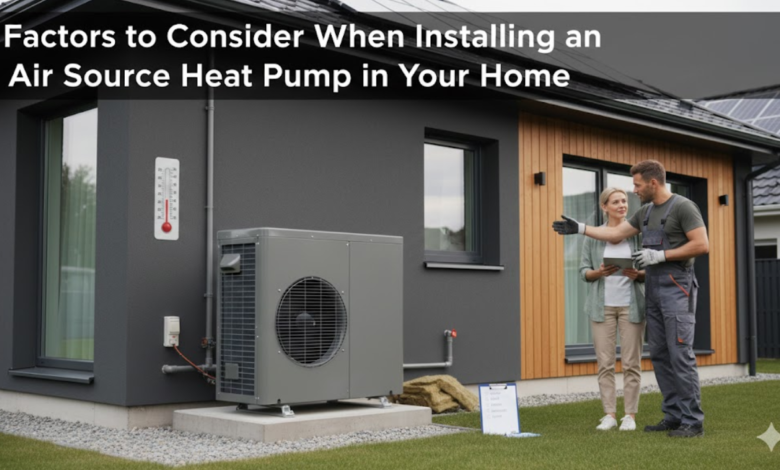
Air source heat pumps take the heat from renewable energy sources and distribute it indoors for central heating and hot water. They reduce energy consumption and energy wastage making your home more energy efficient.
Before you install an air source heat pump, ensure it’s the best suitable heating system for your property’s energy requirements. We will explore all the factors you need to consider before choosing an air source heat pump for your home.
Factors to Consider Before Installing Air Source Heat Pumps
Before you make a decision about installing an heat pump grants in your home, you must consider the following factors to make an informed decision:
-
System Capacity vs. Home Size
First of all, you need to assess the heating and cooling requirements of your home. The heating and cooling capacity of air source heat pumps should match the energy requirements of the property. An unmatched heat pump size will struggle to meet the energy requirements of your home. Undersized heat pumps will not be able to maintain a comfortable temperature on your property. In contrast, the oversized heat pump will lead to energy inefficiencies and generate more heat or cooling than requirements.
Therefore, you should consider the system capacity and home size before you decide on installing an air-source heat pump on your property.
-
Location of the Outdoor Unit
The location of the outdoor unit matters in maintaining adequate airflow and ventilation. You need to decide the location strategically. This can significantly impact the performance of your heat pump and reduce its energy efficiency. This can also cause uneven heating and cooling in different rooms of your home.
Keep your air source heat pump at least 20 centimetres away from the walls and other structures. This helps your system maintain an effective heat exchange. Placing it under a sheltered area to protect it from extreme weather conditions can keep it safe from potential damage. Plus, extreme weather conditions can also cause the lack of performance of your air-source heat pumps.
-
Local Climatic Conditions
Because air source heat pumps take the heat from outside air, compress it to increase temperature, and provide heat to the central heating system, extreme cold weather conditions can reduce the performance of your heat pumps. If you are living in baltic weather conditions, you should avoid installing air source heat pumps for your heating and hot water requirements unless you have an alternate heating system installed.
Assess the local climate conditions before deciding to install air-source heat pumps. The climate significantly impacts the size and type requirements of the heat pump. To make the best use of your heating system, consider installing an air-to-water heat pump. An air-to-water heat pump will also provide hot water for the taps along with heating to the central heating system.
-
Home Thermal Insulation
The thermal efficiency of your home significantly impacts the performance of your air source heat pump. Not having your loft and walls insulated can lead to significant heat loss. Usually, an uninsulated loft can lead to 25% heat loss, while 35% to 45% heat escapes through the walls. That’s why you need to assess if your home’s loft, walls, and floor are properly insulated.
A properly insulated home can lead to reduced heat loss and improve the energy efficiency of your property. So, before you install an air source heat pump, you should install insulation measures in your property to ensure you are not signing up for increased energy bills and the same level of comfort.
-
Internal Heating/Cooling Distribution
The internal heating and cooling distribution plays a crucial role in maintaining an even temperature in your home. Before installing an ASHP, make sure that the existing heat distribution system is compatible with your air source heating system.
You need to evaluate the existing ductwork, whether it’s a radiator or an underfloor heating system. This significantly impacts whether or not your heating system is compatible with your selected air source heat pump.
-
Accessibility for Maintenance
It’s important to give your heat pump regular servicing and maintenance to keep it operational and increase its lifespan. You also need to keep your heating system maintained to ensure it continues to fulfil your heating and cooling requirements. For regular servicing and prompt required repairs, install the outdoor unit where it is accessible, and you can regularly check on its maintenance.
-
Local Regulations and Permits
There are certain building codes and regulations regarding HVAC installations. Before the air source heat pump installation, you might need to take a permit from local authorities. So, make sure you get the permit to install the heat pump to avoid any consequences.
-
Noise Levels
Air source heat pumps can cause higher noise levels and impact your comfort. You need to make sure your heat pump is not installed near the living space or bedrooms. This can cause significant discomfort for the residents.
To avoid higher noise levels, you should review the noise rating of the pump you are selecting. Plus, you can choose a suitable location to avoid or reduce sound disruptions.
-
Availability of Government Grants
Before you make a decision, check if there are any government grants available to support the installation heating system. Also, consider your eligibility for those grants. If you are living in a vulnerable house and meet the low-income criteria, you might get complete or partial funding for air source heat pump installations.
The available government schemes that fund heat pumps are the Energy Company Obligation Scheme and the Boiler Upgrade Scheme.
-
Professional Installation
For installation, make sure you choose a qualified and Safe Gas approved installer like Grant Boilers to ensure the quality of installation and higher performance. Grant Boilers is an ECO4 installer which also ensures you get complete financial support if you qualify. Check your eligibility for the grants by visiting the Grant Boilers website.
Final Thoughts
To wrap up the discussion, there are several factors you should consider before making your decision about installing the air source heat pump for your heating and hot water requirements. Whether it is the capacity of your system, climate considerations, insulation measurements, and regulation permits, considering all the factors can help you avoid any mishaps.
This article explores all the factors you need to take into account when deciding your heating system to ensure your home is more energy efficient and maintains a comfortable temperature.