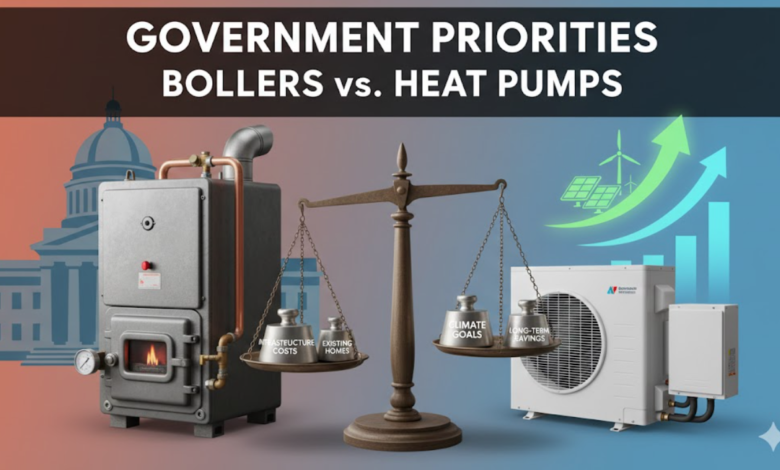
Let me ask you an interesting question, if you were in power and you had to choose between renewable energy and imported energy, what would you choose? Before answering this question, you need to consider that imported energy makes the country dependent on other nations and you would have no control over energy prices. I assume you rely on renewable energy systems rather than having foreign dependency.
Same as the British government is trying to do by promoting renewable energy sources and providing grants for them. Apart from using renewable energy, heat pumps have various advantages over boiler systems. In this article, we are going to explore how the government is prioritising heat pumps, also known as patriotic pumps, over boilers. Many households are now taking advantage of Free Heat Pump Grants to make this transition more affordable. We will also highlight some areas where heat pumps need to be prioritised.
What Are the Government Programs Supporting Heat Pump Adoption
The UK’s commitment to fighting climate change has spawned several initiatives, but none quite as impactful as the Boiler Upgrade Scheme (BUS). This program stands at the forefront of Britain’s heating revolution, marking a decisive shift away from conventional heating methods.
-
The Boiler Upgrade Scheme
When the government launched BUS in 2022, many wondered if homeowners would embrace the change. The scheme offers £5,000 grants to those ready to ditch their gas or oil boilers for heat pumps. Given that home heating contributes roughly 14% of the UK’s greenhouse emissions, the program tackles a significant chunk of our carbon footprint.
Last year brought even better news for potential adopters. The government boosted the scheme’s budget to £295 million, proving their dedication to this green transition. The results speak for themselves application numbers have shot up, suggesting that British homeowners are warming to the idea of greener heating solutions.
-
Energy Company Obligation
While the BUS captures headlines, another crucial program works quietly to ensure no one gets left behind in the heating revolution. The Energy Company Obligation (ECO) scheme takes a different approach, focusing on supporting those who need it most.
Under ECO4, running until 2026, energy suppliers must help vulnerable households upgrade their heating systems. The program has already delivered impressive results:
- Over £1 billion in annual funding
- Support for roughly 200,000 households each year
- Priority access for those receiving certain benefits
- Full funding for heat pump installations in eligible homes
What makes ECO particularly effective is its targeted approach. Unlike the broader BUS, it specifically helps lower-income families and those at risk of fuel poverty make the switch to cleaner heating. Local authorities help identify eligible households, ensuring support reaches those who need it most.
-
Clean Heat Market Mechanism (CHMM)
While the BUS captures headlines, another crucial program works behind the scenes. The Clean Heat Market Mechanism (CHMM) supports manufacturers of low-carbon heating systems. This initiative aims to transform the heating industry by:
- Driving innovation in heat pump technology
- Creating healthy competition among manufacturers
- Ensuring steady supply meets growing demand
- Supporting British manufacturing capabilities
Financial incentives
Let’s talk money because that’s what matters to most homeowners. Heat pumps do cost more upfront than traditional boilers, there’s no getting around that fact. However, the government’s support makes the switch far more manageable than you might think.
Available Support
The current financial landscape for heat pump adoption includes:
- Installation grants up to £5,000
- Access to the expanded funding pool
- Decreasing equipment costs thanks to market competition
- Significant long-term savings on energy bills
While the initial investment might raise eyebrows, heat pump efficiency tells the real story. These systems typically deliver three to four times more heat energy than the electricity they consume. As energy prices continue their upward climb, this efficiency translates into real savings for households.
Regulatory Changes: Removing Barriers
Remember when installing a heat pump meant wrestling with endless paperwork? Those days are largely behind us. The government has systematically removed barriers that once made installation a headache.
Recent Changes
Planning requirements have seen a major overhaul. Most domestic heat pump installations now fall under permitted development rights, eliminating the need for lengthy planning applications. New building regulations actively encourage low-carbon heating solutions, making heat pumps an increasingly natural choice for both new builds and renovations.
These streamlined regulations reflect a broader shift in UK housing policy, one that prioritizes sustainable heating solutions while maintaining high standards of installation quality.
Market Trends and Real-World Impact
The government’s push for heat pumps has sparked significant changes in Britain’s heating industry. Installer training programs are filling up, manufacturers are expanding their operations, and homeowners are increasingly curious about making the switch.
Consumer demand tells an interesting story. Applications for the Boiler Upgrade Scheme have exceeded expectations, particularly in areas where energy costs hit hardest. Energy suppliers have taken notice, with many now offering specialized tariffs designed specifically for heat pump users.
-
Industry Response
Local heating companies are adapting quickly to meet this rising demand. Many traditional boiler installers have expanded their expertise to include heat pump installation, while others have emerged as heat pump specialists. This shift has created new jobs and opportunities across the sector.
-
Facing the Challenges
Despite growing momentum, the transition hasn’t been entirely smooth sailing. Various hurdles still need addressing before heat pumps become the norm in British homes.
-
Resistance from the Gas Boiler Sector
Traditional boiler manufacturers and installers have raised valid concerns about the pace of change. Many worry about job security and the costs of retraining. Some industry veterans point out that certain older homes might need significant modifications to accommodate heat pump systems effectively.
-
Setting the Record Straight
Misconceptions about heat pumps continue to circulate in some communities. People worry about noise levels, garden space, and whether these systems can handle British winters. These concerns, while understandable, often stem from outdated information about early heat pump models.
Real-World Performance: Heat Pumps vs Boilers
Let’s look at how these systems actually perform in British homes. The numbers tell an interesting story about efficiency and running costs.
-
Efficiency in Practice
Modern heat pumps typically achieve remarkable efficiency rates:
- They convert one unit of electricity into three or four units of heat
- Performance remains stable even in cold weather
- Smart controls optimize operation based on weather conditions
- Systems adapt to household heating patterns
Traditional boilers, while improved over the years, still can’t match these efficiency levels. Even the best condensing boilers top out at around 90% efficiency, losing valuable energy through waste heat.
-
The Environmental Angle
When paired with renewable electricity, heat pumps offer substantial carbon savings:
- Reduced carbon footprint by up to 70% compared to gas boilers
- No direct emissions from the heating system
- Lower impact on local air quality
- Contributing to neighbourhood sustainability goals
Running Costs and Maintenance
Initial installation costs aside, heat pumps often prove more economical over time:
- Lower annual maintenance requirements
- Fewer moving parts to replace
- Longer expected system lifespan
- Protection against rising gas prices
Looking Ahead: The Future of Home Heating
The government’s target of 600,000 annual heat pump installations by 2028 signals a clear direction for Britain’s heating future. This goal represents more than just numbers it’s about reshaping how we think about home heating.
Industry Development
To meet these ambitious targets, several developments are already underway:
- Expanded installer training programs
- Investment in British manufacturing facilities
- Research into more efficient heat pump designs
- Integration with smart home technologies
For homeowners considering their options, timing matters. Current government support makes switching to a heat pump an opportune moment. The combination of grants, improving technology, and rising energy costs creates a compelling case for making the change.
Conclusion: A Warmer, Greener Britain
The shift from gas boilers to heat pumps represents more than just a change in heating technology. It’s part of Britain’s broader move toward energy independence and environmental responsibility. While challenges remain, the path forward looks increasingly clear.
The government’s commitment to heat pumps, backed by substantial funding and practical support, has created real momentum. As more households make the switch, sharing their positive experiences, the transition gains further strength. Many homeowners also find themselves reassessing their current setups, often asking Are Radiator Covers Safe when looking to optimize their home’s thermal efficiency. Through this combination of policy support and growing public acceptance, Britain is steadily moving toward a more sustainable heating future.
This change won’t happen overnight, but the groundwork is firmly in place. For those considering their heating options today, heat pumps offer a chance to be part of this important transition while potentially saving money in the long run.