Gustav Theodore Holst Biography: Life, Works, And The Story Behind The Planets

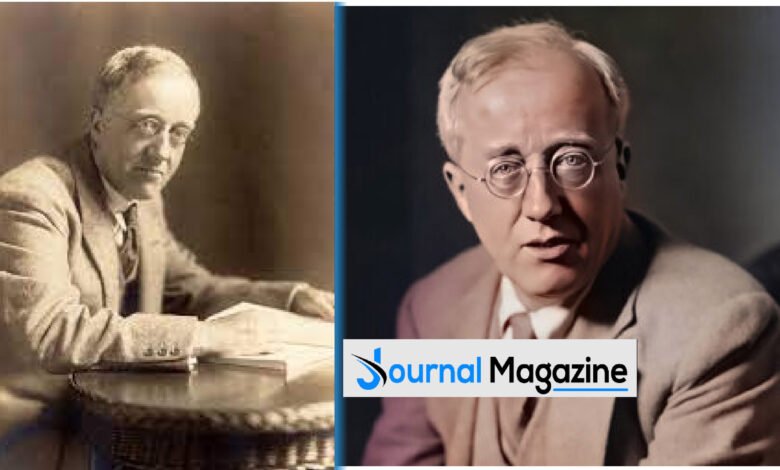
Gustav Theodore Holst (1874–1934) was a visionary English composer, arranger, and music teacher who transformed the sound of 20th-century British music. Best known for his orchestral suite The Planets, Holst’s works blend English folk traditions, Eastern mysticism, and bold modern harmonies. Beyond his compositions, Holst was a devoted educator who helped shape the future of British music through his innovative teaching methods and influence on younger composers. His artistic curiosity and intellectual depth set him apart as a pioneer who bridged Romanticism and Modernism.
This article explores Gustav Holst’s life, early influences, career journey, major works, musical style, and his lasting contribution to British heritage.
Profile Bio: Gustav Theodore Holst
| Full Name | Gustav Theodore Holst |
|---|---|
| Date of Birth | September 21, 1874 |
| Place of Birth | Cheltenham, Gloucestershire, England |
| Date of Death | May 25, 1934 |
| Place of Death | London, England |
| Age at Death | 59 years |
| Nationality | British (of Swedish descent) |
| Occupation | Composer, Arranger, Conductor, Music Teacher |
| Education | Royal College of Music, London |
| Notable Work | The Planets (1914–1917) |
| Active Years | 1890–1934 |
| Musical Style | Orchestral, Choral, Folk, and Modernist Influences |
| Marital Status | Married to Isobel Harrison (m. 1901) |
| Children | Imogen Holst (1907–1984) – Composer and Musicologist |
| Instruments Played | Trombone, Piano, Violin |
| Major Teaching Roles | St. Paul’s Girls’ School and Morley College, London |
| Burial Place | Chichester Cathedral, West Sussex, England |
| Famous Quote | “Music, being identical with heaven, isn’t a thing of momentary thrills, or even hourly ones. It’s a condition of eternity.” |
Early Life and Family Background
Gustav Theodore Holst was born on September 21, 1874, in Cheltenham, Gloucestershire, England. He came from a musical family of Swedish descent. His grandfather, Gustavus von Holst, was a well-known composer and harp teacher in Riga before moving to England. His father, Adolph von Holst, was an organist, choirmaster, and piano teacher, while his mother, Clara von Holst, was a talented singer. Tragically, his mother died when Gustav was only eight years old. The loss deeply affected him, but he found comfort in music. He grew up in a home filled with piano lessons, church music, and recitals, which inspired his early interest in composition.
Holst studied at Cheltenham Grammar School for Boys, where he began writing simple pieces and playing several instruments, including the piano, violin, and later the trombone. His father encouraged trombone playing, believing it might help Gustav’s asthma and strengthen his lungs. By the age of 12, Holst had already started composing short works, showing early signs of his talent and determination. His musical upbringing and family influence laid the foundation for a lifetime devoted to creativity and teaching.
Education and Musical Training
After completing his schooling, Holst won a scholarship to the Royal College of Music (RCM) in London. There, he studied composition under Charles Villiers Stanford, one of Britain’s leading composers of the late 19th century. During his time at the RCM, Holst met Ralph Vaughan Williams, who became a lifelong friend and creative partner. The two composers often shared and critiqued each other’s work, shaping the direction of British music in the early 20th century.
Holst faced physical challenges during his student years — a nerve condition known as neuritis in his right arm forced him to abandon the piano and focus on composition and the trombone instead. Intellectually, Holst was drawn to the writings of Richard Wagner, Richard Strauss, William Morris, and George Bernard Shaw, and even attended socialist meetings. These influences expanded his worldview and informed his later works, which often explored spirituality, humanity, and social ideals.
Early Career and Struggles
After leaving the Royal College of Music, Holst supported himself by playing trombone professionally. He performed with the Carl Rosa Opera Company and a popular light music group called the White Viennese Band, conducted by Stanislas Wurm. Although this work provided income, Holst disliked its repetitiveness and called it “worming.”
At the same time, he began composing seriously, exploring poetry, mysticism, and world literature for inspiration. He was particularly influenced by Walt Whitman, setting his poetry to music in works such as The Mystic Trumpeter (1904).
During this period, Holst also became fascinated with Hindu philosophy and Sanskrit texts. In 1909, he enrolled at University College London to study Sanskrit so he could translate sacred Hindu writings himself. This led to what became known as his “Sanskrit period”, producing several important works, including:
-
Sita (1899–1906), an opera based on the Indian epic Ramayana
-
Savitri (1908), a chamber opera inspired by the Mahabharata
-
Choral Hymns from the Rig Veda (1908–1914), for choir and small orchestra
-
The Cloud Messenger (1913), based on a Sanskrit poem by Kalidasa
These compositions demonstrated his interest in combining Eastern spirituality with Western musical forms, a groundbreaking approach for his time.
Teaching Career and Educational Contributions
St. Paul’s Girls’ School and Morley College
In 1905, Gustav Holst accepted a position as Director of Music at St. Paul’s Girls’ School in Hammersmith, London, a role he held until his death in 1934. Two years later, he also became Director of Music at Morley College, a progressive institution for adult education. At both schools, Holst revolutionized music education. He emphasized creativity, originality, and hands-on learning rather than rigid academic drills. His approach encouraged students to express themselves through music and experiment with composition.
Holst as a Mentor
Holst’s influence extended far beyond the classroom. His students included future composers Michael Tippett, Edmund Rubbra, and Benjamin Britten, who would carry his ideas into the next generation of British music. In 1913, St. Paul’s built a soundproof studio for Holst’s use, where he composed some of his finest works, including the St. Paul’s Suite, written to celebrate the school’s music program.
Holst believed that music should be for everyone, not just professionals. He organized community choirs and amateur orchestras, making classical music accessible to all social classes — a radical idea for his time. His dedication to teaching was as profound as his commitment to composing, and both careers fed into each other, enriching his creative output.
Major Compositional Periods and Musical Style
Gustav Holst’s musical journey evolved through several distinct stylistic phases, each reflecting his search for a unique voice that combined tradition with innovation.
Early Romantic and Folk Influence
Holst’s early compositions were influenced by Wagner, Brahms, and English folk melodies. He admired the simplicity and lyricism of traditional English songs and madrigals, often using them as inspiration for his own works. His friendship with Ralph Vaughan Williams deepened this appreciation for English folk traditions.
Sanskrit and Eastern Influence (1908–1912)
His fascination with Hindu mysticism led him to compose works based on Sanskrit texts. These pieces introduced exotic harmonies and rhythmic flexibility, blending Eastern spiritual themes with Western orchestral writing.
Mature Period (1914–1930)
Holst’s mature style emerged during the years surrounding The Planets. He experimented with bitonality (two keys at once), unusual time signatures, and modal harmonies. His orchestration became more colorful and inventive, using instruments in unconventional ways to create new textures and emotional effects.
Late Period (1925–1934)
In his later years, Holst’s music became more introspective and austere. Works such as Egdon Heath and Hammersmith reflected his philosophical outlook and interest in modern forms. He avoided repetition and never tried to copy the success of The Planets, preferring to explore new musical ideas. Holst’s evolution from Romantic lushness to modern minimalism marks him as one of Britain’s most original composers.
The Planets: A Masterpiece
Between 1914 and 1917, Gustav Holst composed The Planets, his most famous and celebrated work. Inspired by astrology rather than astronomy, the suite portrays the emotional and psychological character of seven planets in our solar system (excluding Earth and Pluto).
Movements of The Planets
-
Mars, the Bringer of War – Aggressive and rhythmic, symbolizing conflict and chaos.
-
Venus, the Bringer of Peace – Gentle and lyrical, offering calm after Mars’s violence.
-
Mercury, the Winged Messenger – Light, swift, and playful, representing movement and communication.
-
Jupiter, the Bringer of Jollity – Joyful and expansive, later adapted as the hymn “I Vow to Thee, My Country.”
-
Saturn, the Bringer of Old Age – Slow and solemn, reflecting wisdom and the passage of time.
-
Uranus, the Magician – Quirky and energetic, portraying unpredictability.
-
Neptune, the Mystic – Ethereal and haunting, featuring a wordless female chorus fading into silence.
Innovations and Impact
The Planets showcased Holst’s mastery of orchestration, rhythm, and atmosphere. Each movement introduced new textures and emotional landscapes, creating one of the most original works in 20th-century music.
Premiered in 1918, the suite was an immediate success. Its influence extended far beyond classical music — composers like John Williams and Hans Zimmer have cited it as inspiration for modern film scores, including Star Wars and Gladiator. The Planets remains a landmark in orchestral literature and a defining symbol of British musical identity.
Other Notable Works
Holst’s creativity extended far beyond The Planets. His other works reveal his versatility and intellectual depth.
Orchestral Works
-
Egdon Heath (1927): Inspired by Thomas Hardy’s landscapes, an introspective and modern piece.
-
A Moorside Suite (1928): A staple of brass band music, showcasing strong melodies and rhythmic vitality.
-
Hammersmith (1930): A portrait of London’s Hammersmith district, blending urban sounds with lyrical themes.
-
Brook Green Suite (1933): A charming work for strings, written for St. Paul’s Girls’ School orchestra.
Choral and Vocal Works
-
The Hymn of Jesus (1917): Based on early Christian texts, exploring mysticism and community.
-
Ode to Death (1919): A meditative choral piece inspired by Walt Whitman.
-
Choral Symphony (1923–24): A large-scale, ambitious exploration of text and sound.
Operas and Stage Works
-
Sita (1899–1906)
-
Savitri (1908)
-
The Perfect Fool (1923)
-
At the Boar’s Head (1925)
These operas reflect Holst’s wide cultural curiosity — from Indian mythology to Shakespearean settings.
Influence, Legacy, and Impact on British Music
Gustav Holst’s influence on British music was profound. Alongside his friend Ralph Vaughan Williams, he helped create a new national style that combined folk traditions, modal harmonies, and modern orchestration. He inspired composers such as Benjamin Britten and Michael Tippett, who carried forward his ideals of innovation and accessibility. Holst’s bold use of rhythm and harmony also influenced film composers and contemporary symphonists worldwide.
His daughter Imogen Holst, a distinguished composer and conductor in her own right, dedicated her life to promoting his legacy. The Holst Birthplace Museum in Cheltenham preserves his life story and manuscripts for future generations. Today, Holst is celebrated as one of the founding figures of the English musical renaissance, a movement that redefined British classical music in the 20th century.
Personal Life and Beliefs
Holst married Isobel Harrison in 1901, and they had one daughter, Imogen Holst, who became an important composer and musicologist.
He was known for his modest, shy personality and dislike of fame. A vegetarian and admirer of socialist ideals, Holst believed in simplicity, honesty, and equality. He struggled with health problems throughout his life, including asthma, neuritis, and stomach ailments. Despite this, he maintained a disciplined routine of teaching and composing. His personal philosophy emphasized spiritual balance, humility, and self-expression, all of which are reflected in his music.
Later Years and Death
During the 1920s, Holst’s fame from The Planets gradually declined, but he continued to experiment with new forms. A fall while conducting in 1923 caused a head injury that affected his health permanently. He composed Egdon Heath, Hammersmith, and Brook Green Suite during his later years, showing no decline in creativity despite physical struggles.
Holst died on May 25, 1934, in London, after surgery for a stomach ulcer. He was buried at Chichester Cathedral, where his epitaph reads:
Contribution to British Heritage
Gustav Holst’s contribution to British cultural heritage extends beyond composition. He helped define a new orchestral sound that merged English folk roots with modern techniques. His influence on music education empowered generations of students, particularly women, at a time when professional opportunities for female musicians were limited. Holst’s legacy embodies both artistic excellence and social progress, ensuring his name remains central to Britain’s musical identity.
Awards, Honors, and Recognition
Although Holst avoided publicity, his achievements were widely recognized.
-
The BBC frequently broadcast his works, including The Planets and Egdon Heath.
-
He conducted early recordings with the London Symphony Orchestra (1924–1926), among the first of their kind.
-
Numerous centenary celebrations, concerts, and memorials have honored him since his death.
Today, his name stands among Britain’s greatest composers, alongside Elgar, Vaughan Williams, and Britten.
Conclusion
Gustav Holst’s journey from a modest Cheltenham musician to one of Britain’s most influential composers reflects a life of creativity, curiosity, and courage. Through The Planets and his vast body of work, Holst redefined orchestral music and helped establish a modern English musical identity. His dedication to education, innovation, and accessibility continues to inspire musicians worldwide.
FAQs About Gustav Theodore Holst
1. Who was Gustav Holst?
Gustav Holst (1874–1934) was an English composer, arranger, and teacher best known for his orchestral suite The Planets. He played a key role in shaping 20th-century British classical music and influenced generations of composers through his innovative works and dedication to music education.
2. What is Gustav Holst best known for?
Gustav Holst is best known for his masterpiece The Planets (1914–1917), a seven-movement orchestral suite inspired by the astrological characters of the planets. It remains one of the most frequently performed and influential orchestral works in the world.
3. What inspired Gustav Holst to write The Planets?
Holst was inspired by astrology, mythology, and human emotion rather than astronomy. Each movement of The Planets reflects the astrological character of a planet, from the warlike energy of “Mars” to the serene mystery of “Neptune.”
4. How did Gustav Holst influence British music?
Gustav Holst helped shape the English musical renaissance, combining folk melodies with modern harmonies and rhythms. His friendship with Ralph Vaughan Williams and his role as an educator inspired later composers such as Benjamin Britten and Michael Tippett.
5. When and where was Gustav Holst born and died?
Gustav Holst was born on September 21, 1874, in Cheltenham, Gloucestershire, England, and died on May 25, 1934, in London. He was buried at Chichester Cathedral, where his epitaph reads, “The heavenly spheres make music for us.”
Read More: Michael Portillo Net Worth 2025: From Politics To Television Success