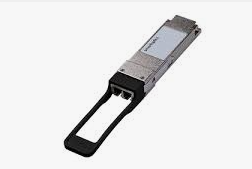
In 40G network deployments, performance is not determined solely by data rate or interface type. The true reliability of a link depends heavily on optical budget planning, especially when transmission distances extend up to 10 kilometers. While 100G and higher speeds often dominate discussions, 40G QSFP+ modules continue to serve critical roles in aggregation networks, data center interconnects, and campus backbones. Among them, 40GBASE-PSM4 QSFP+ modules offer a distinctive parallel single-mode architecture that requires careful optical budget evaluation to ensure stable long-distance transmission.
Unlike wavelength-division solutions, 40G QSFP+ modules based on the PSM4 architecture transmit four parallel 10Gbps lanes over separate single-mode fibers. This design changes how optical loss accumulates across the link. Instead of multiplexing wavelengths onto a single fiber pair, the module uses an MTP/MPO interface with multiple fiber strands. Understanding how optical power is distributed and received across these lanes is essential for accurate link budget calculation and long-term network stability.
The Fundamentals of Optical Budget
Defining Transmit Power and Receiver Sensitivity
The optical budget of a module refers to the difference between its minimum guaranteed transmit power and its minimum receiver sensitivity. This difference determines how much total attenuation the link can tolerate while still maintaining an acceptable bit error rate. In a 40GBASE-PSM4 QSFP+ 1310nm 10km MTP/MPO Optical Transceiver Module, each of the four lanes operates independently at 10Gbps over single-mode fiber, typically within the 1310nm transmission window.
Transmit power must be strong enough to compensate for fiber attenuation and connector loss, but not so high that it overloads the receiver at short distances. Receiver sensitivity defines the weakest optical signal that can still be reliably interpreted. A higher sensitivity value provides greater tolerance to loss and improves overall link margin. When designing or verifying a 10km link, engineers must ensure that the calculated total loss does not exceed the module’s specified optical budget.
Fiber Attenuation Over 10km
Loss Characteristics at 1310nm
Single-mode fiber attenuation at 1310nm typically averages around 0.35 to 0.4 dB per kilometer. Over a full 10km span, this results in approximately 3.5 to 4 dB of intrinsic fiber loss before additional factors are considered. While this attenuation is relatively low compared to older fiber types or higher wavelengths, it still consumes a significant portion of the available optical budget.
The advantage of operating at 1310nm lies in its reduced chromatic dispersion compared to longer wavelengths such as 1550nm. Lower dispersion helps maintain signal integrity over distance, but it does not eliminate power loss. Therefore, accurate fiber length measurement and conservative attenuation assumptions are critical when planning PSM4 deployments.
Connector and MTP/MPO Insertion Loss
The Impact of Parallel Fiber Interfaces
A defining characteristic of 40GBASE-PSM4 technology is its use of MTP/MPO connectors. Unlike duplex LC connectors used in WDM-based modules, PSM4 modules rely on multiple fiber strands within a single connector housing. Each transmit lane travels on a dedicated fiber, and each receive lane uses a corresponding fiber strand.
Every connection point introduces insertion loss. A typical MTP/MPO connector may add approximately 0.3 to 0.6 dB of loss per mated pair, depending on connector quality and cleanliness. If the link includes patch panels or intermediate connections, total connector loss can quickly accumulate. Since each lane functions independently, uneven connector contamination or fiber defects can affect individual channels differently, potentially leading to lane imbalance and degraded overall performance.
Maintaining strict cleaning procedures and high-quality connector standards is therefore essential in preserving optical margin in PSM4 deployments.
Lane Uniformity and Parallel Signal Integrity
Balancing Power Across Four Channels
Because 40GBASE-PSM4 uses four parallel optical channels instead of multiplexed wavelengths, uniform performance across all lanes is crucial. Even if the aggregate link budget appears sufficient, a single underperforming lane can trigger errors or link instability.
Manufacturing precision plays an important role in ensuring that transmit power levels and receiver sensitivities are tightly matched across all four channels. Variations in laser output, fiber alignment, or photodiode response can create slight imbalances. In long-distance applications approaching 10km, these imbalances may reduce effective margin on weaker lanes. For this reason, quality-controlled production and thorough testing are vital in maintaining consistent multi-lane performance.
Environmental and Temperature Effects
Thermal Influence on Optical Stability
Temperature fluctuations can influence both transmit power and receiver sensitivity. As internal components heat up, laser output characteristics may shift slightly, and photodetector performance can vary. In controlled data center environments, temperature changes are usually moderate, but in campus or industrial deployments, environmental conditions may be less predictable.
A robust 40GBASE-PSM4 module integrates thermal management mechanisms to stabilize internal operating conditions. Even small variations in optical output can affect available link margin over long distances. Therefore, optical budget planning should incorporate conservative assumptions to accommodate potential environmental variation over the module’s operational lifetime.
Calculating Real-World Link Margin
Accounting for Worst-Case Scenarios
To determine whether a 10km PSM4 link will perform reliably, engineers must calculate total expected loss and compare it with the module’s specified optical budget. Fiber attenuation, connector insertion loss, and potential splicing losses should all be included. It is prudent to reserve additional margin to account for aging fiber, minor installation imperfections, and unforeseen environmental factors.
For example, if fiber attenuation contributes 4 dB and connector losses add another 1.5 dB, the total baseline loss reaches 5.5 dB. If the module’s optical budget is rated at 6.5 dB, the remaining 1 dB serves as operational margin. While technically sufficient, such a narrow margin may not provide long-term resilience. Best practices typically recommend maintaining extra headroom to ensure stable performance throughout the lifecycle of the network.
Comparing PSM4 to WDM-Based Optical Budgets
Structural Differences in Loss Distribution
Unlike LR4 modules that multiplex four wavelengths onto a single fiber pair, PSM4 distributes optical energy across separate fibers. This structural difference eliminates WDM filter loss but introduces multi-fiber management complexity. The optical budget calculation for PSM4 is therefore more straightforward in terms of wavelength considerations, yet more sensitive to connector quality and fiber uniformity.
In environments where high-quality MTP/MPO infrastructure is already in place, PSM4 can provide a cost-effective and technically efficient solution for 10km 40G transmission. However, its parallel nature requires disciplined installation and maintenance practices to preserve link integrity across all channels.
Conclusion
Understanding the optical budget of 40GBASE-PSM4 QSFP+ modules is essential for achieving reliable 10km single-mode transmission. The interplay between transmit power, receiver sensitivity, fiber attenuation, connector loss, lane uniformity, and environmental stability ultimately determines link performance. While the parallel architecture simplifies certain aspects of optical design, it demands careful attention to multi-fiber management and consistent channel quality.
By accurately calculating total link loss and maintaining adequate operational margin, network designers can confidently deploy 40GBASE-PSM4 QSFP+ 1310nm 10km MTP/MPO optical transceiver modules in campus backbones, aggregation layers, and data center interconnect scenarios. A disciplined approach to optical budgeting ensures not only immediate functionality but also long-term network resilience and reliability.