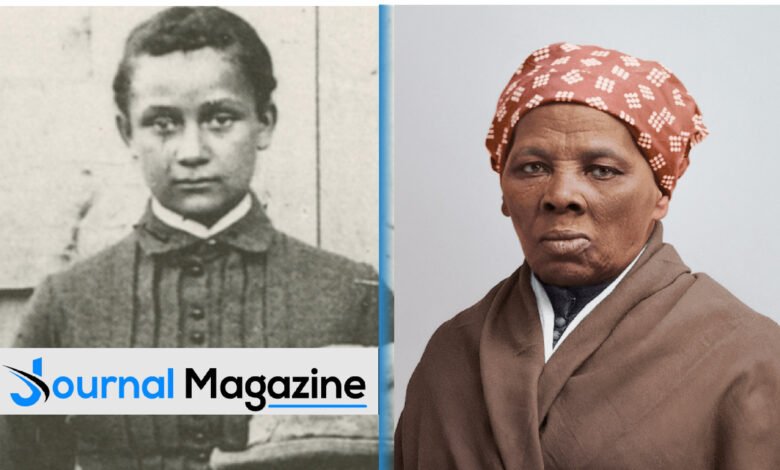
Gertie Davis was the only documented adopted daughter of Harriet Tubman and her husband, Nelson Davis. She entered Tubman’s life during the 1870s, a period when Tubman had already become a national figure for her work on the Underground Railroad and her service during the Civil War. Gertie’s adoption added a personal and maternal dimension to Tubman’s legacy, showing a side of her life that is often overshadowed by her heroic public achievements. Very little personal information about Gertie exists today, which makes her one of the most overlooked figures connected to Tubman. The primary verified references to her come from U.S. census records and historic museum archives that document her presence in the Davis household.
Profile Bio: Gertie Davis
| Personal Information | Details |
|---|---|
| Full Name | Gertie Davis |
| Known For | Adopted daughter of Harriet Tubman and Nelson Davis |
| Birth Year | Around 1874 (based on census records) |
| Birthplace | Likely New York, USA |
| Adoption Year | 1874 |
| Parents | Harriet Tubman (adoptive mother), Nelson Davis (adoptive father) |
| Ethnicity | African American |
| Childhood Home | Auburn, New York (Tubman’s 7-acre farm) |
| Marital Status | Married a man with the surname “Watson” (verified) |
| Children | No verified records |
| Occupation | Not documented |
| Historical Mentions | 1875 and 1880 U.S. Census, Smithsonian archives |
| Notable For | Being Tubman’s only documented daughter |
| Death | Exact date unknown; limited historical records |
Early Life and Background
Gertie’s estimated birth year comes from census data, which places her birth around 1874, although the exact date and birthplace remain unknown. No verified records identify her biological parents, which was common for many orphaned or abandoned children during the 19th century. Her early life before adoption remains undocumented, leaving historians with limited information about her origins. During the post–Civil War era, many Black children lacked official birth certificates, especially those who were orphaned or living in unstable conditions. The social climate of the time made documentation difficult, and children without families often entered informal adoption arrangements. Gertie represents one of many children whose early years were not formally recorded but who found family through community networks.
Adoption by Harriet Tubman and Nelson Davis
Harriet Tubman and Nelson Davis adopted Gertie in 1874, a fact confirmed through the 1880 census that lists her as their “Adopted Daughter.” Tubman was in her 50s when she became a mother, long after her legendary missions guiding enslaved people to freedom. The couple likely adopted her out of compassion and the desire to build a family after losing several biological children in infancy. Adoption during the late 19th century was not formalized by modern legal standards, meaning few official papers were created or preserved. The adoption reflected Tubman’s lifelong humanitarian mission, extending her care beyond public activism into her private life. Census documentation remains the most reliable source confirming Gertie’s place in the household.
Childhood on the Auburn Farm
Gertie grew up on Tubman’s seven-acre farm located at 182 South Street in Auburn, New York. This property, purchased by Tubman in 1859, served as a home, a refuge, and a community center for people in need. Daily life on the farm involved tending animals, maintaining crops, and helping with household tasks. Tubman opened her home to elderly people, disabled individuals, and orphans who required shelter, creating a diverse and compassionate environment for Gertie. The farm often hosted visitors including Civil War veterans and activists, giving Gertie exposure to important historical figures. One major event of her childhood was the 1880 fire that destroyed the farmhouse. The community helped rebuild it as a two-story brick home, reflecting the strong local support for Tubman.
Family Environment and Community Life
The Auburn community surrounding Tubman’s home provided Gertie with a strong support system. Many of Tubman’s relatives lived nearby, including her brothers and extended family who had also relocated to Auburn. The household often included boarders—freed slaves, veterans, elderly individuals, and children—making it a lively and culturally rich environment. Nelson Davis, a Civil War veteran, played a role in Gertie’s early childhood until his death in 1888. Tubman’s mother, Rit, likely helped raise Gertie until her death in 1880. The family environment emphasized moral values, faith, resilience, and charitable service, which shaped Gertie’s upbringing. Through daily interactions, she witnessed Tubman’s unwavering commitment to helping others and maintaining a welcoming household for those in need.
Historical Records and Documentation
Information about Gertie comes mainly from two confirmed sources: the 1875 New York State census and the 1880 U.S. census, both of which list her as Tubman’s daughter. Photographs held in museum collections also show Gertie standing beside Harriet and Nelson Davis, offering rare visual documentation of her life. However, no adoption papers, letters, or personal records belonging to Gertie have survived. Missing documents are common for Black families in the post–Civil War era due to limited recordkeeping, poverty, and discriminatory archival practices. This lack of documentation leaves historians with gaps that cannot be filled through speculation. The preservation of existing archival photographs and census records remains essential to understanding her place in Tubman’s family history.
Relationship With Harriet Tubman
Gertie shared a close and nurturing relationship with Harriet Tubman, who became not only her adoptive mother but also a mentor and moral guide. Tubman’s life was filled with activism, but she made time to raise Gertie in a loving household grounded in charity and service. Gertie likely accompanied Tubman during community events, church gatherings, and meetings related to civil rights and women’s suffrage. As Tubman grew older and faced health challenges—including pain from the head injury sustained in childhood—Gertie is believed to have assisted her mother during times of illness. Through daily life, Gertie learned resilience, generosity, and leadership from Tubman, who balanced public responsibilities with devotion to her family.
Adult Life and Marriage
As an adult, Gertie married a man with the last name “Watson,” although details about their marriage and life together are limited. There is no confirmed information about whether the couple had children, where they lived long-term, or what occupations they held. The absence of detailed records reflects the broader challenges historians face when documenting the lives of African American women in the 19th and early 20th centuries, whose personal histories were rarely archived. Despite the lack of detail, Gertie likely remained connected to the Auburn community and the extended Tubman family. Her adult years, although quiet in the historical record, formed part of the legacy that surrounded her mother’s memory after Tubman’s death in 1913.
Gertie’s Place in Tubman’s Family Legacy
As Harriet Tubman’s only confirmed daughter, Gertie occupies a unique place in the Tubman family story. She represents the continuation of Tubman’s lineage, not through blood but through love, commitment, and shared life experiences. Gertie appears in several family photographs preserved in museum collections, making her one of the few individuals visually linked to Tubman’s private life. Her upbringing in a household dedicated to justice, charity, and community shaped her understanding of service. Although she did not become a public figure like her mother, Gertie contributed to preserving Tubman’s memory through the community she remained part of. Her presence reminds historians that Tubman’s greatest legacy included not only heroic escapes but the creation of a family built on compassion.
Why Her Story Remains Unrecorded
Gertie’s story remains largely undocumented due to the limited preservation of records for Black women in the 19th century. Many African American families faced systemic barriers that prevented the creation or survival of personal documents, such as adoption papers, diaries, or legal records. Economic hardship, segregation, and lack of formal institutions also contributed to historical gaps. Additionally, Tubman herself lived a private personal life, and her focus on survival and community service meant fewer written accounts of daily family matters. Historians rely on fragmented census data, photographs, and secondhand accounts to reconstruct Gertie’s life. Understanding these silences is important because it highlights how many lives, especially those of Black women, were left out of mainstream historical narratives.
Historical Importance of Gertie Davis
Gertie Davis holds historical significance because she provides insight into Harriet Tubman’s identity beyond her public heroism. Her presence in Tubman’s life shows Tubman as a mother, a caregiver, and a woman who built a family in the years after the Civil War. Gertie symbolizes Tubman’s compassion and her desire to nurture the next generation despite the hardships she endured. Her life reminds us that history is shaped not only by major events but also by private relationships and everyday experiences. Gertie’s story contributes to a fuller understanding of Tubman’s humanity and the emotional dimensions of her legacy. Even with limited documentation, Gertie remains an important figure in preserving the family history of one of America’s most influential women.
Legacy and Lasting Impact
Although much of Gertie’s life remains unknown, her place in Harriet Tubman’s household ensures that she remains part of a significant historical narrative. The photographs and census records that document her existence continue to be studied by historians seeking to understand Tubman’s private world. Gertie’s adoption highlights Tubman’s dedication to caring for others long after her heroic missions ended. Her life helps broaden the understanding of African American domestic life during Reconstruction and the decades that followed. Today, Gertie’s story is recognized as an essential, though quiet, part of the Tubman family legacy. She represents compassion, family, and continuity within a household built on resilience and service to others.
Conclusion
Gertie Davis holds an important place in Harriet Tubman’s personal story. Historians found only a few records about her, yet those details show her close bond with Tubman and Nelson Davis. Gertie grew up on the Auburn farm, where she learned compassion, strength, and service from her mother. Tubman fought for freedom in public life, but at home she built a family and cared for a child who needed love. Gertie’s life reminds us that Tubman was not only a national hero but also a mother with a gentle heart. Even though many facts about Gertie remain unknown, her presence adds depth to Tubman’s legacy and helps us understand the human side of a remarkable leader.
FAQs About Gertie Davis
1. Who was Gertie Davis?
Gertie Davis was the adopted daughter of Harriet Tubman and her second husband, Nelson Davis. She joined the Tubman household in 1874 and became the only documented child Tubman raised.
2. When was Gertie Davis adopted by Harriet Tubman?
Harriet Tubman and Nelson Davis adopted Gertie Davis in 1874, as confirmed by census records from the late 19th century.
3. What do we know about Gertie Davis’ early life?
Very little is documented about her early years. Records show she was likely born in New York, and no verified information exists about her biological family.
4. Did Gertie Davis have children of her own?
There is no verified historical evidence that Gertie Davis had children. Her family line remains unknown due to limited documentation.
5. Why is Gertie Davis’ life not well recorded?
Her story remains unclear because adoption papers, personal records, and legal documents were rarely preserved for Black families in the 19th century. Most available information comes from census reports and photographs.
Read More: 607 UNC: Biography, Real Name, Age, Net Worth & Rise Of The Underground Rapper