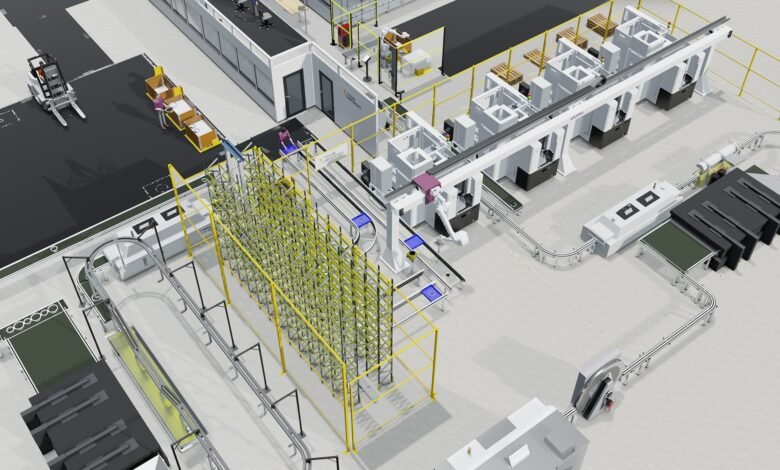
Access in the rapidly developing industrial sector in the Middle East involves multiple layers of complexity—far more than just getting a truck to a dock. It also involves how goods are moved vertically from the ground floor to mezzanine storage and how different transitions are sheltered from the external environment. For any business that handles heavy-duty cargo, the value of vertically integrated cargo handling systems and the expertise of an industrial elevator company in UAE are fundamentals. Ingenious vertical integration systems of industrial elevators and material lifts are key to high-rise warehousing and vertical cargo handling within prime, high-value locations. The combination of these systems with high-performance engineered dock shelters allows the creation of a fully integrated, sheltered cargo transportation system that eliminates the influence of dust and extreme ambient heat for all cargo transported from the vehicle, through the dock, and to any storage level.
Beyond the Threshold: The Role of Industrial Openings
The elevator vertically transports the goods to another level. However, for the system to work properly and avoid any bottlenecks, the horizontal cargo flow entry and exit points must be equally industrial. The type of door technology, including sealing technology, plays a major role in determining the speed, safety, and the whole site’s operational energy economy.
In order to maintain a smooth workflow, facility managers understand the importance of the following operational components:
- High-Cycle Torsion Spring Systems: Standard doors are designed to fail. This is the reason why industry experts say that any door, including overhead doors, that are installed in a modern integrated logistics facility must be fitted with springs that have a high cycle count, that is, designed to perform between 50,000 and 100,000 cycles, to be considered a proactive operational component, not a frequent maintenance ‘downtime’ component.
- Integrated Safety Light Curtains: Modern access systems have gone beyond basic infrared sensors that only detect a single beam. They now incorporate full-height light curtains. These devices generate a protective field that consists of thousands of infrared beams, fully spanning the door opening and protecting people and pallets that are positioned or stacked unevenly.
- Smart Interlocking Protocols: In secure and climate-controlled environments, doors and lifts are also interlocked. As an example, a dock door can be interlocked so that it cannot be opened until the freight elevator is on the same level. This ensures that the elevator can be used immediately and also minimizes the duration of the open door and the release of conditioned air.
The Precision of the Overhead Sectional Door
Most of the modern warehouses in the region have now adopted the overhead sectional door as the new standard for perimeter access. These doors comprise multiple individual panels that move vertically and then tuck away horizontally at the ceiling. This design also allows for unobstructed access to the floor space all the way around the opening for the operation of forklifts.
| Feature | Industrial Benefit | Long-Term ROI |
| PU-Foam Insulation | Maintains internal temperatures between 20°C and 25°C. | Significant reduction in annual HVAC energy expenditure. |
| Double-Skinned Steel | High resistance to wind loads and accidental impact. | Lower insurance premiums and fewer structural repairs. |
| Vision Panels | Allows for natural light and safety monitoring. | Improved worker morale and reduced electricity for lighting. |
When purchasing these units, it is important to contact an elevator company in Dubai that has vertical and horizontal sliding industrial doors. This way, you will be able to achieve operational consistency across all movable parts of your facility while ensuring a unified approach to safety and performance.
Balancing Protection and Budget: The Dock Shelter Equation
The final touchpoint of access is sealing the gap between building and transport vehicles. Dock shelters offer an adaptable ‘embrace’ to all truck sizes, providing an essential weatherproof and sealing barrier critical to the transport of pharmaceuticals, food logistics, and high-value electronics.
Yet, evaluating the dock shelter price against the shelter’s performance always poses a challenge to many facility managers. The different engineering ‘styles’ the initial investment covers is significant:
- Mechanical Flap Shelters: Typically, these are the most cost-effective shelter options. They consist of durable fabric flaps that ‘brush’ the sides of the truck. They work well in ambient warehouses where a perfect seal is not necessary, but dust ingress is.
- Inflatable Dock Shelters: These shelters are more expensive but are by far the best in performance for cold-chain logistics. Once the truck is positioned, the header and side bags inflate to create a seal so insulated that it is almost energy-loss free.
- Retractable Frame Designs: Some shelters are designed so that the frames are collapsible if a truck backs in ‘off-center.’ This design, while it may add slightly to the initial investment, is worth thousands of dirhams in the long term by saving the structural frame of the shelter from being damaged during a poor docking attempt.
Paying attention to the details of industrial access ensures that a facility is not just a building but an efficient system optimized for the future of logistics in the UAE.