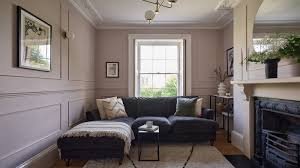
Terraced houses are a British classic for good reason: they’re cosy, characterful, and often far more attainable than detached or semi-detached homes in the same area. The trade-off, of course, is space. Terraces can come with narrow hallways, darker central rooms, and those infamous box rooms that feel like they were designed for exactly one chair and a mild sense of regret. The good news is that “bigger” is often a simple perception game. With a few smart design choices, a terrace can feel brighter, calmer, and far more spacious than its floorplan suggests.
Colour scheme
If there’s one budget-friendly change that has a major impact, it’s paint. Lighter, muted tones help bounce light around and soften harsh edges, which can make narrow rooms feel more open. Muted, matt finishes tend to work best because they reduce glare while still keeping the space airy. Pastel pink can add warmth without closing a room in, mustard yellow brings a little optimism to north-facing spaces, and baby blue can make small rooms feel calmer and fresher. If in doubt, keep ceilings and woodwork a touch lighter than walls to lift the height of the room visually, and avoid high-contrast feature walls in already-tight spaces.
Smart storage
Clutter is one of the quickest ways to make a terraced house feel smaller. When surfaces are busy and walkways are blocked, rooms start to feel “full” even when they aren’t. The aim is to increase storage without increasing visual heaviness. That usually means avoiding chunky, deep furniture that eats floor space, and leaning into storage that either blends in or does double duty. Think: ottomans, lift-up sofa beds with storage underneath, window seats with hidden compartments, and shelving that goes vertical rather than wide.
This is also where fitted solutions can be a game-changer, because they use awkward terrace dimensions instead of fighting them. For example, fitted furniture measured to slot into the space can turn dead corners, alcoves, and narrow bedrooms into genuinely usable storage while retaining clear sightlines.
Lighting
Lighting is basically emotional architecture. The brighter and more evenly lit a room feels, the larger it feels. Instead of relying on a single harsh ceiling light, build a layered mix:
- A main light (ceiling or pendant) for general brightness
- Task lighting (reading lamp, desk lamp, under-cabinet kitchen lights)
- Accent lighting (table lamps, wall lights) to add warmth and depth
Mirrors help too. Placed opposite a window, they bounce daylight deeper into the room and visually extend the walls. Window dressings matter as well: sheer curtains or simpler blinds usually keep things lighter than heavy fabrics that swallow up daylight.
Final Thoughts
When it comes down to it, making a terraced house feel bigger isn’t about pretending it’s something it’s not. It’s about creating breathing room: calmer surfaces, brighter corners, smarter storage, and a layout that lets the home feel easy to move through. Do that, and a terrace stops feeling “small” and starts feeling intentionally designed.