Start With the Wedding Style
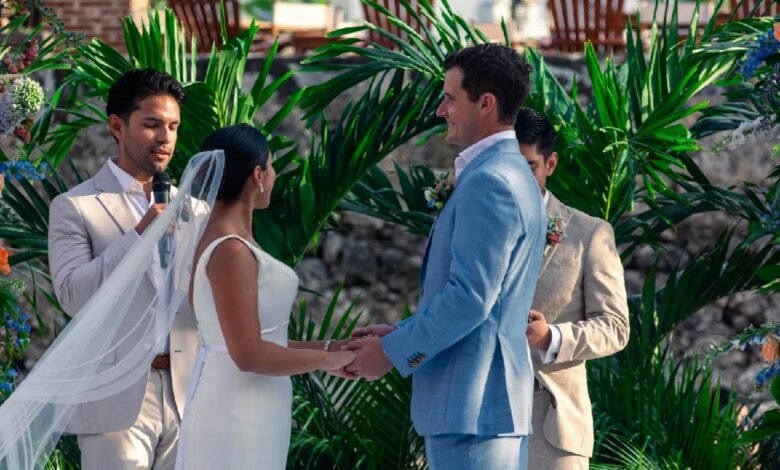
The venue and dress code should guide the suit choice. A hotel wedding, church ceremony or formal evening reception usually calls for a sharper suit in navy, charcoal, black or grey. A country house, barn or outdoor wedding can work well with tweed, herringbone, check fabrics or warmer colours such as brown, tan or olive.
For black tie weddings, a tuxedo is usually the right choice. This means a black or midnight blue dinner jacket, formal trousers, a white dress shirt, black bow tie and black formal shoes. For most other weddings, a three piece suit gives the groom a smart and flexible option.
Why Three Piece Groom Suits Work Well
A three piece suit includes the jacket, waistcoat and trousers. This makes it a strong choice for grooms because it keeps the outfit looking complete throughout the day.
The waistcoat is especially useful after the ceremony. Wedding days are long, and many grooms remove their jacket during the reception or evening party. With a waistcoat, the outfit still looks sharp in photos and around guests.
A three piece suit also gives the groom a clearer look compared with the rest of the wedding party. The groom can choose a double breasted waistcoat, a different tie, a patterned pocket square or a slightly different colour to stand apart without looking too bold.
Popular Groom Suit Colours
Navy is one of the safest and most versatile groom suit colours. It suits most venues, works across seasons, and pairs well with brown or black shoes.
Grey is another classic option. Light grey works well for spring and summer weddings, while charcoal feels more formal and suits autumn, winter and evening events.
Black is best for formal weddings, evening receptions and black tie dress codes. For a standard daytime wedding, black can sometimes look too severe unless the styling is softened.
Brown and tan suits are popular for country, barn and rustic weddings. They pair well with cream shirts, brown shoes and simple accessories.
Green and olive tones can work well for outdoor and autumn weddings, especially with tweed or textured fabrics.
Check and tweed suits are good choices when the groom wants more character. They work especially well in country venues, but the rest of the outfit should stay simple.
How the Groom Can Stand Apart
The groom should look connected to the wedding party but not identical to everyone else. This can be done with small changes rather than a completely different outfit.
A groom might wear:
- A different waistcoat
- A double breasted waistcoat
- A different tie or bow tie
- A pocket square in a stronger colour
- A buttonhole
- A slightly darker or lighter suit than the groomsmen
These details help mark out the groom while keeping the group coordinated.
Matching Groomsmen Without Overdoing It
Groomsmen do not always need to wear exactly the same suit as the groom. Matching suits create the cleanest look, but similar colours can also work well.
For example, the groom could wear a navy three piece suit while the groomsmen wear navy two piece suits. Another option is for the groom to wear a patterned waistcoat while the groomsmen wear plain waistcoats. The key is to keep one or two elements consistent, such as suit colour, tie colour or pocket square.
Shirt, Shoe and Accessory Choices
A white shirt is the easiest choice for most groom suits. It looks clean, works with almost every colour and gives a strong base for ties, bow ties and pocket squares.
Pale blue shirts work well with navy and grey suits. Cream shirts can suit brown, tan and tweed suits. For black tie, stick with a white formal shirt.
Brown shoes work well with navy, blue, grey, tan, brown and tweed suits. Black shoes are best for black, charcoal and tuxedo styles. The belt should match the shoes.
Accessories should support the suit, not fight with it. If the suit has a strong check or textured fabric, choose a plain tie and simple pocket square. If the suit is plain, there is more room for texture or pattern in the accessories.
Fit Matters More Than Detail
Colour and fabric matter, but fit is what makes the biggest difference. A groom suit should sit cleanly on the shoulders, fasten without pulling, and allow the groom to move comfortably.
The jacket sleeve should show a small amount of shirt cuff. Trousers should sit neatly at the shoe without too much fabric gathering at the ankle. The waistcoat should cover the waistband and sit close to the body without feeling tight.
It is worth trying the full outfit before the wedding day, including shirt, shoes, tie and accessories. This gives enough time to make adjustments if something does not sit right.
Conclusion
The best groom suit is one that fits the wedding, feels comfortable, and helps the groom look like himself at his best. A three piece suit is a strong option for most weddings because it gives structure, works well in photographs and stays smart after the jacket comes off.
Choose the suit around the venue, season and dress code, then keep the styling balanced. A well chosen groom suit should look right on the wedding day and still be useful for future formal occasions.