Whether it’s a living or workplace, maintaining the humidity level is paramount not only to ensure a dry and clean environment but also to safeguard your loved ones’ and employees’ health. Areas with excess moisture in the area are usually more prone to risks of mould growth, poor air quality, and structural damage, leading to negatively impacting your physical, mental, and financial health.
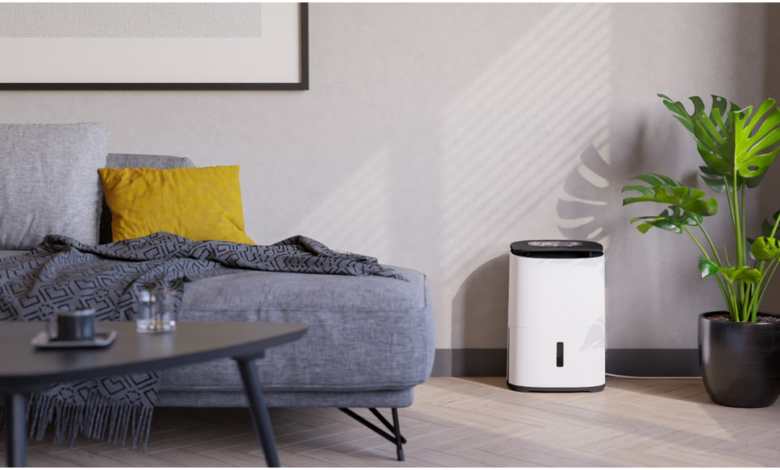
Investing in a reliable dehumidifier can help you significantly reduce moisture and maintain a clean and dry environment. It is specifically designed to ensure effective humidity control and maintain energy efficiency, resulting in long-term benefits and savings. Moreover, they have a compact design that enables them to easily fit even small spaces.
Major Types of Dehumidifiers
With various options available, the selection of the right dehumidifier can be difficult. Each dehumidifier has its own unique features, capacity, and weaknesses that are worth considering to determine which one will best suit your needs. For example, the MeacoDry 12L dehumidifier is a popular choice for many households due to its compact size and efficient moisture removal. That’s why we are going to compare the pros and cons of the major types of dehumidifiers.
Condensation Dehumidifiers
As indicated by the name, work is based on the basis of the condensation process. It first traps excess moisture and lets it cool, which then converts into water, from where it is collected. It is a highly versatile dehumidifier and can be ideal for various types and sizes of spaces,s including commercial areas, and indoor environments.
Here are some of its potential benefits and side effects to help you understand its importance:
Pros
- It is highly effective in warm temperatures and areas with excessive moisture.
- Typically, you’re more energy-efficient than desiccant dehumidifiers, making it an ideal pick for all types of customers.
- It has high potential and can perform intricate tasks with Quieter operation.
Cons
- Less effective in cooler environments, as cold temperatures reduce their efficiency.
Desiccant Dehumidifiers
The second most reliable name in the world of dehumidifiers is desiccant dehumidifiers. It uses materials like silica gel that absorb moisture from the air. The desiccant is then heated, releasing the moisture, which is collected and removed. It is a perfect fit for cold environments, unheated spaces like garages, and areas with low to moderate humidity.
Let’s take a look at its pros and cons to help you make an informed decision.
Pros
- It is highly effective and can work efficiently in low temperatures, ensuring maximum energy efficiency.
- The second most important benefit of a dehumidifier system is that these are lighter and more portable than condensation models.
- They also produce lower noise levels as they don’t use a compressor.
Cons
- Higher energy consumption makes them less efficient over long periods.
- Limited moisture removal capacity compared to condensation dehumidifiers.
Compact Dehumidifiers
If you are looking for a small and efficient dehumidifier that can fit your small spaces like bathrooms, closets, RVs, or single rooms, then compact dehumidifiers can be a significant solution for you. Compact dehumidifiers are smaller units designed for limited spaces and generally use Peltier technology.
The major pros and cons of this reliable dehumidifier are listed below;
Pros
- The most significant perk of a compact dehumidifier is that it is small and portable, enabling you to easily place it in tight spaces.
- They reduce or eliminate noise, ensuring quieter operation due to Peltier technology.
- Low energy consumption is also a benefit of compact dehumidifiers…
Cons
- Limited capacity, only suitable for small spaces.
- Slower moisture removal than larger models.
LGR Dehumidifiers
LGR dehumidifiers are advanced condensation models with enhanced cooling, allowing them to operate in extremely humid environments. They often include a pre-cooling system that improves moisture extraction.
Here are their pros and cons to help you make an informed decision;
Pros
- High moisture removal capacity, even in severe humidity.
- Efficient at lower grain levels, achieving drier results than standard refrigerant models.
- Robust and durable, making them ideal for heavy-duty use.
Cons
- Expensive and larger than standard dehumidifiers.
- Can be louder and require more maintenance.
Whole-House Dehumidifiers
Whole-house dehumidifiers are designed to control humidity for an entire home rather than a single room. They are typically installed directly into a home’s HVAC system, making them ideal for maintaining a consistent humidity level throughout the house.
Pros
- Covers all areas of your home, ensuring uniform humidity control.
- Energy-efficient for long-term use as it reduces the need for multiple small units.
- Reduces risks of mould, dust mites, and structural damage on a large scale
Cons
- Higher upfront cost and professional installation required.
- Not portable, so it cannot be moved from room to room.
A Final Word
The selection of the right and reliable system, like the Dantherm CDT 60, is crucial to ensure effective humidity control and avoid inefficiencies, costly repairs, and frequent replacement costs. All these humidifiers are designed using state-of-the-art technology and are equipped with advanced features, tailored to the unique needs of different types and sizes of spaces and areas.
You can consider your needs and carefully navigate all available options to make the right choice and retain the comfort and value of your living or workplace.